
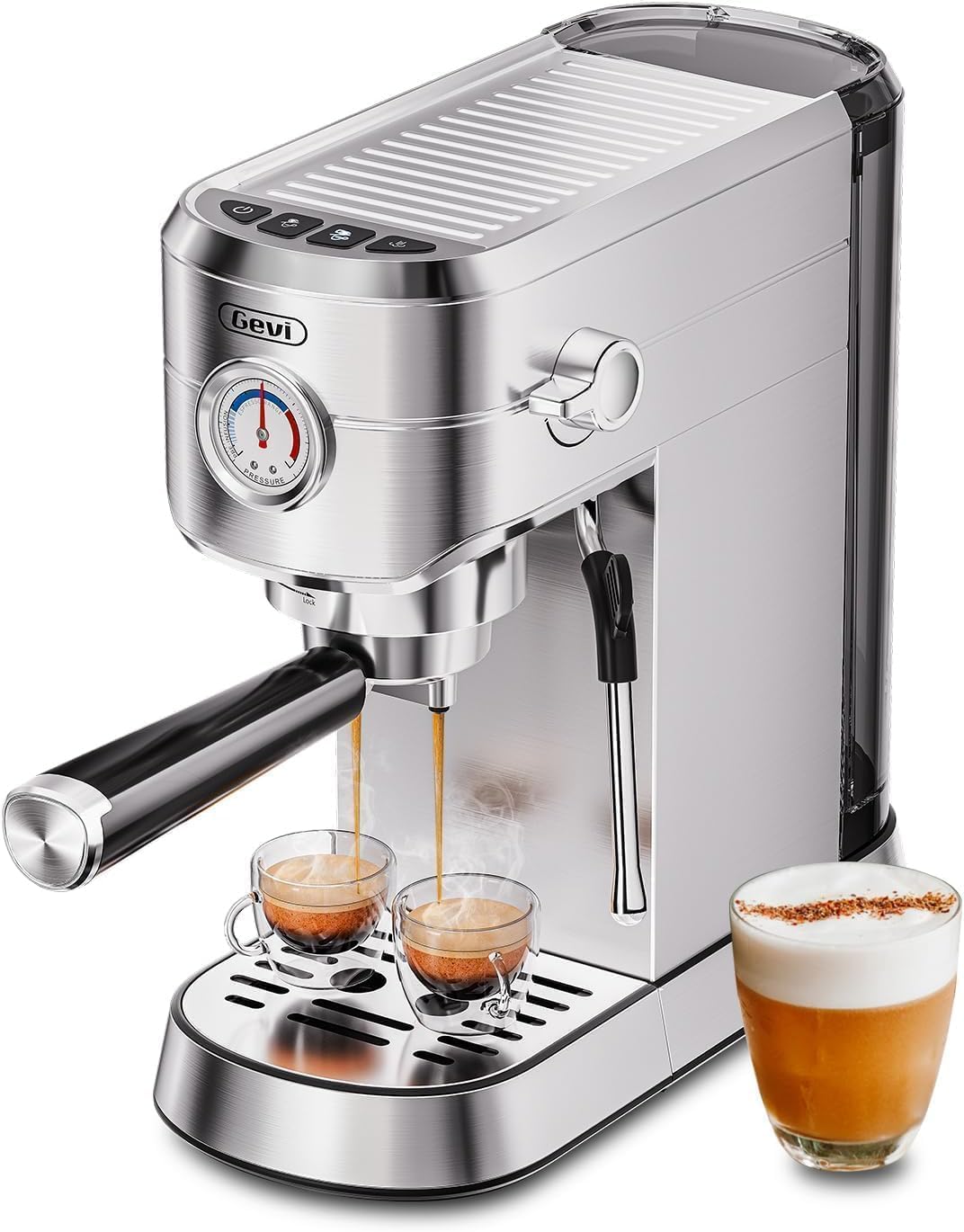
Gevi Commercial Espresso Machine
Our strongest starting point because its steam capability represents a useful machine type to compare against the workflow and utility requirements above.
Dual/multi-boiler machines provide more independent control of brew and steam temperatures; heat-exchanger machines use one main steam boiler with a brew-water path through it. Both can work commercially, but multi-boiler designs offer more tuning flexibility.
Traditional HX machines are proven, relatively simple and can deliver strong simultaneous brew/steam performance. Baristas manage temperature through workflow and flush routine.
Independent brew boilers make temperature changes and consistency easier across coffees. The trade-off can be higher purchase price, more components and more complex service.
For “Dual Boiler vs. Heat Exchanger Commercial Espresso Machines,” these three models give you concrete products to compare against the requirements above, instead of leaving the answer at theory.

Our strongest starting point because its steam capability represents a useful machine type to compare against the workflow and utility requirements above.

A useful second comparison because its semi-automatic design represents a different workflow to compare against the requirements above.

A contrasting third option because its multi-drink platform represents a different machine type to compare against the workflow and utility requirements above.