
BEST MID-VOLUME
LEM BigBite #12
Our strongest starting point because 0.75 HP • #12 head and Rated around 11 lb/min give the buyer two concrete traits to verify against this requirement.
0.75 HP • #12 headRated around 11 lb/min
Check →
#12, #22 and #32 describe grinder head/plate size families, not horsepower. As the number increases, the throat and grinding plate are generally larger, which supports higher production when the motor and auger are sized to match.
A #12 is common for restaurants and smaller processors; #22 is a strong middle ground for butcher-shop work; #32 is chosen when larger batches and faster output justify the bigger machine. A large head with an underpowered motor is not automatically faster.
Plates, knives, stuffing tubes and replacement parts are size-specific. If a shop already owns #22 accessories, staying within that system can reduce spare-parts cost and simplify inventory.
For “What Do #12, #22 and #32 Mean on a Commercial Meat Grinder?,” these three models give you concrete products to compare against the requirements above, instead of leaving the answer at theory.
Our strongest starting point because 0.75 HP • #12 head and Rated around 11 lb/min give the buyer two concrete traits to verify against this requirement.
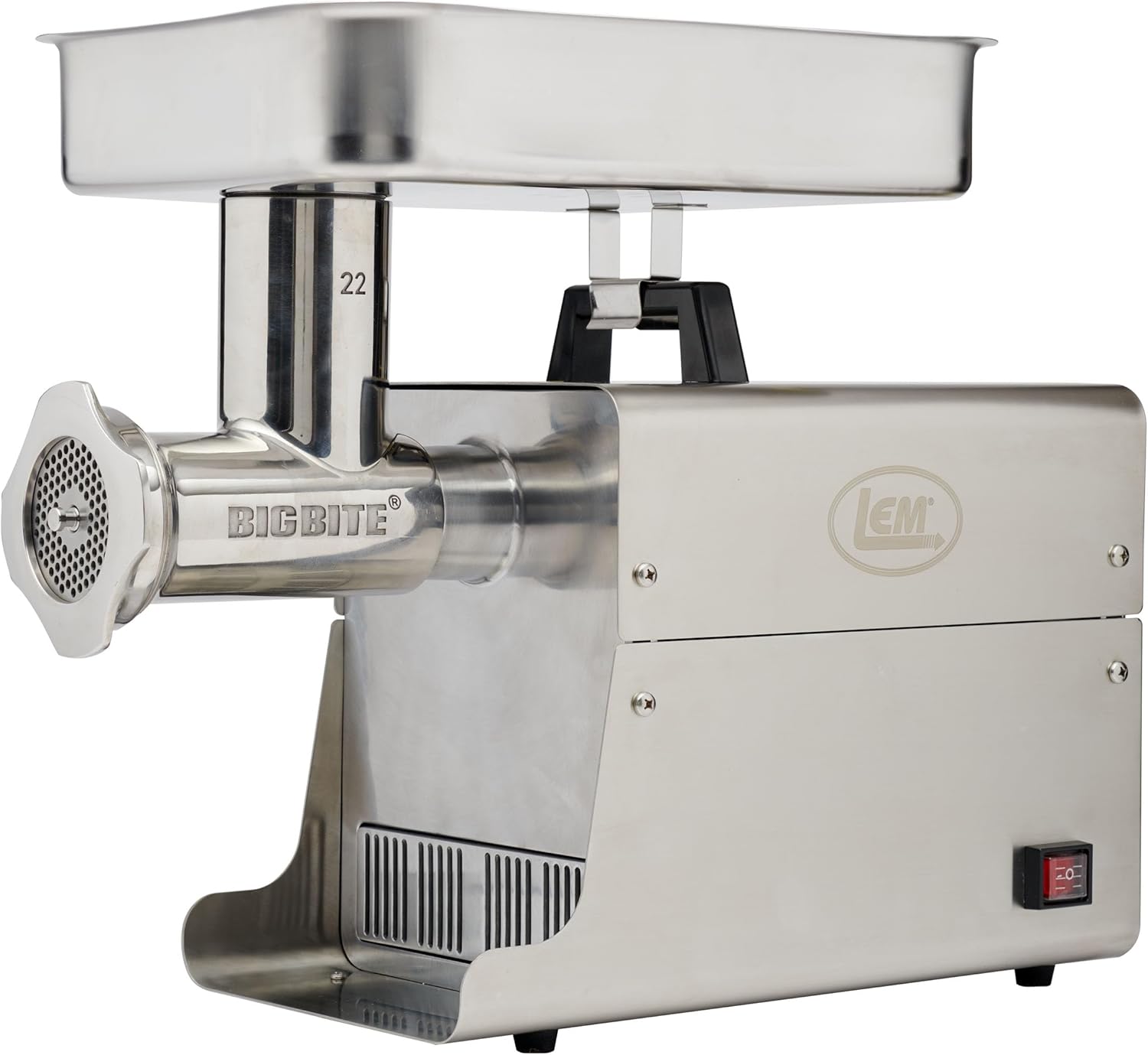
A useful second comparison because 1.0 HP • #22 head and Rated around 13 lb/min give the buyer two concrete traits to verify against this requirement.

A contrasting third option because 1.5 HP • #32 head and Rated around 17 lb/min give the buyer two concrete traits to verify against this requirement.