
BEST MID-VOLUME
LEM BigBite #12
Our strongest starting point because 0.75 HP • #12 head gives you a real capacity reference while Rated around 11 lb/min shows the format you are comparing.
0.75 HP • #12 headRated around 11 lb/min
Check →
Plate hole diameter determines grind coarseness, while #12/#22/#32 describes the physical plate family that fits the head. Most commercial kitchens benefit from at least a coarse plate and a finer finishing plate matched to their menu.
Coarser holes are useful for first grinds and textured sausage; smaller holes create a finer finished grind but increase resistance and can raise product temperature. Many recipes use a coarse first pass followed by a second grind.
Knife and plate surfaces work as a matched cutting pair. Dull or mismatched pieces smear meat and reduce throughput, so a commercial shop should keep the correct size replacements on hand.
For “What Grinding Plate Sizes Does a Commercial Meat Grinder Need?,” these three models give you concrete products to compare against the requirements above, instead of leaving the answer at theory.
Our strongest starting point because 0.75 HP • #12 head gives you a real capacity reference while Rated around 11 lb/min shows the format you are comparing.
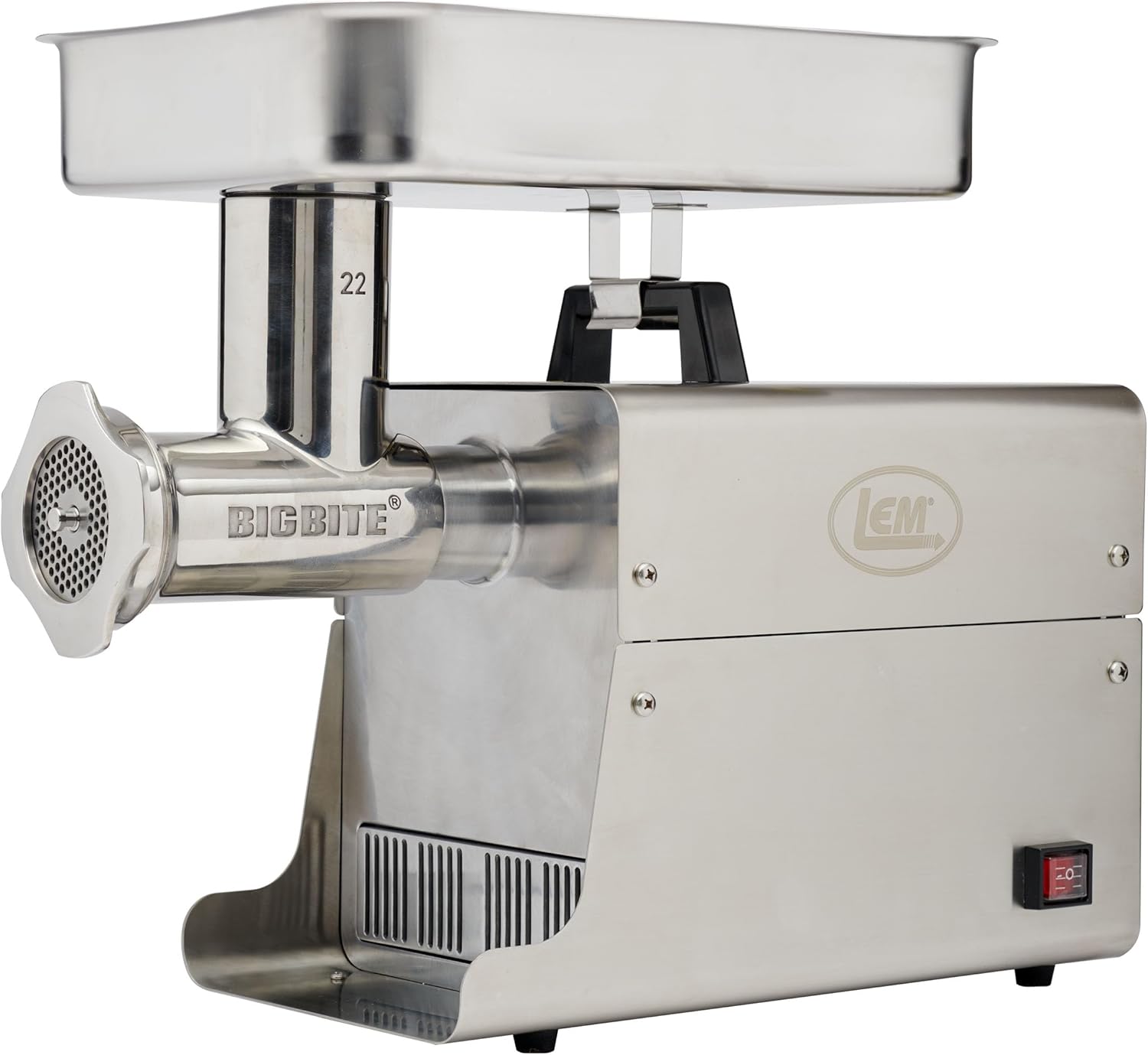
A useful second comparison because 1.0 HP • #22 head gives you a real capacity reference while Rated around 13 lb/min shows the format you are comparing.

A contrasting third option because 1.5 HP • #32 head gives you a real capacity reference while Rated around 17 lb/min shows the format you are comparing.